
The Immune System
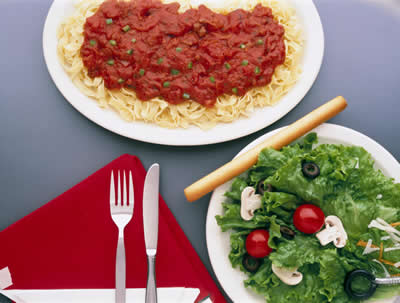 Nutrient-rich, Low-Fat Diets
Help Build The Immune
System.
More New Evidence That Fatty
Foods Are Bad For Health Has
Been Further Emphasized
With This New Study From
Sweden...
Laboratory subjects fed a fat-based diet over a long period got
worse at fighting bacteria in the blood, reveals a thesis from the
Sahlgrenska Academy at the University of Gothenburg, Sweden.
The subjects fed the diet derived 60 per cent of their total calories
from fat. They were compared with subjects fed a low-fat diet, where
no more than ten per cent of their calories came from fat.
As expected, those on the high-fat diet got fatter. A more surprising
result was that their immune system was less active. The white blood
cells got worse at dealing with bacteria in the blood, which could have
contributed to many contracting infections.
"Obesity is usually associated with inflammation that does not result
from an infection, which simply means that the immune defenses are
activated unnecessarily," explained the researchers. "Ironically, the
subjects on the high-fat diet seem to have a less active immune
system when they really need it."
Fat people are at a greater risk of acquiring infection, for example in
connection with an operation. In a controlled-laboratory environment,
the study shows that it is fatty food rather than obesity in itself which
affects the ability to fight off sepsis caused by bacteria.
The researchers have also investigated different variants of three
genes that are important for the immune system and noted that
several of the gene variants that strengthen immunity also result
in less obesity.
"There are all kinds of links between the immune system on the
one hand and obesity and diet on the other," they concluded.
In 2003 an AASM task force of sleep experts examined the use
of medications to treat insomnia in children. A consensus meeting
summary was published in 2005 in the Journal of Clinical Sleep
Medicine. The task force emphasized that behavioral treatment
approaches to bedtime struggles and night waking in children
have a well-documented empirical basis and are the mainstay of
treatment, and that pharmacologic approaches should be largely
considered adjuncts in the treatment of pediatric insomnia.

No comments:
Post a Comment